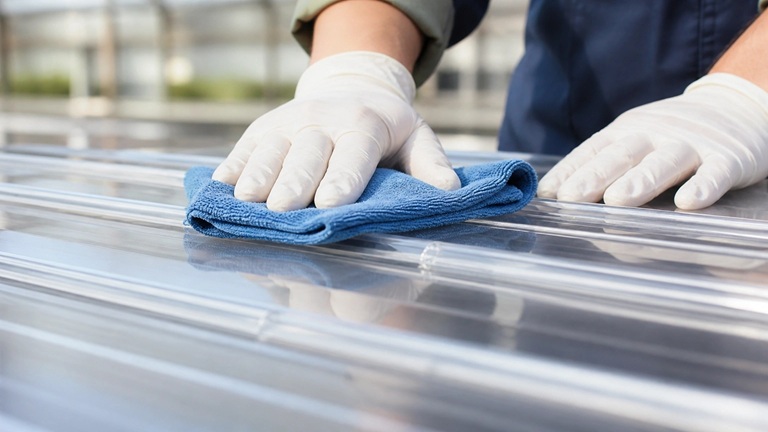
Dust, fingerprints and outdoor grime can reduce the clarity of polycarbonate sheets. Routine care usually involves rinsing away grit, washing gently with a compatible mild detergent and rinsing thoroughly. However, coatings can change the cleaning requirements. For Australian homes and workplaces, following the sheet manufacturer’s instructions helps prevent scratches, surface damage and avoidable replacement costs.
Key Takeaways
- Identify the sheet grade and coating before choosing cleaners.
- Rinse away loose grit before wiping the surface.
- Use approved detergent and clean, non-abrasive cloths.
- Avoid cleaning hot panels or working in direct sunlight.
- Seek product-specific advice for stubborn stains and coated surfaces.
Check the Sheet Before Cleaning
Identify Coatings and Care Requirements
Find the manufacturer’s care instructions before starting. Standard, abrasion-resistant and anti-condensation surfaces may require different treatment. An abrasion-resistant coating does not make a sheet scratchproof, while unsuitable cleaning can affect some anti-condensation coatings.
Confirm that the detergent is compatible with the exact product. Glass cleaners are not automatically suitable for plastic. If the grade is unknown, ask the supplier before applying chemicals.
Clean Polycarbonate with a Gentle Routine
When cleaning polycarbonate, remove loose particles first. Wiping a dusty panel can drag grit across the surface and leave fine scratches.
Rinse and Wash Gently
Rinse with clean water to loosen dirt. Where the product instructions permit, wash using lukewarm water, an approved mild detergent and a clean, soft cloth or non-abrasive sponge.
Rinse the cloth frequently and replace dirty wash water. Work in small sections so detergent does not dry on the panel. Choose a shaded, cooler period for outdoor cleaning.
Rinse and Dry Carefully
Rinse detergent away promptly with clean water. If permitted by the manufacturer, dry gently with a fresh, soft cloth to reduce water spotting.
Avoid heavy pressure or repeated rubbing. If a mark remains, stop and check the recommended removal method.
Avoid Damaging Tools and Chemicals
Abrasive powders, scouring pads, sharp scrapers and unsuitable brushes can damage the surface. Highly alkaline cleaners and unapproved solvents can also cause harm.
For paint, adhesive residue or grease, request instructions for the specific sheet and coating. Test an approved cleaner on a small, inconspicuous area before wider use. Spot testing does not replace compatibility confirmation.
Do not polish coated sheets or use pressure-washing equipment unless the manufacturer expressly permits the method.
Build Maintenance Around Exposure
Inspect panels for dirt build-up, scratches, cracks and loose fixings. Adjust cleaning frequency to local conditions rather than following one schedule for every installation.
For roof panels, arrange suitable access and never stand directly on the sheeting.
Summary
Gentle methods and compatible products help preserve clarity. Keep care instructions available and investigate persistent marks before using stronger cleaners. For product enquiries and help identifying suitable grades, Contact Plastral.